Media, Messaging, and the 2026 Midterms
As we head into a pivotal moment in American civic life, it’s worth taking a step back to consider not just what’s at stake in the 2026 elections, but how media and advertising shape the democratic process — and why that matters for all of us, whether we’re voters, marketers, or simply citizens.
The Stakes: A Record-Setting Media Environment
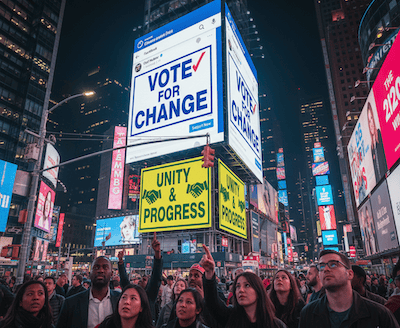
The 2026 U.S. midterm elections are on track to be the most expensive non-presidential cycle ever, with political ad spending projected to reach **approximately $10.8 billion — a more than 20% increase over 2022.
Nearly half of that spend is expected in the battles for control of Congress, underscoring just how competitive and highly contested this cycle will be.
Some of the most widely used media channels:
- Connected TV (CTV) & Streaming Video
- Broadcast TV
- Social Platforms
- Programmatic Digital & Audio
- Digital & Static OOH
Together, these channels reflect an increasingly omnichannel approach to political advertising — one designed to balance mass reach, precision targeting, and repeated exposure across how and where voters consume media.
The Role of Out-of-Home and Retail-Adjacent Media
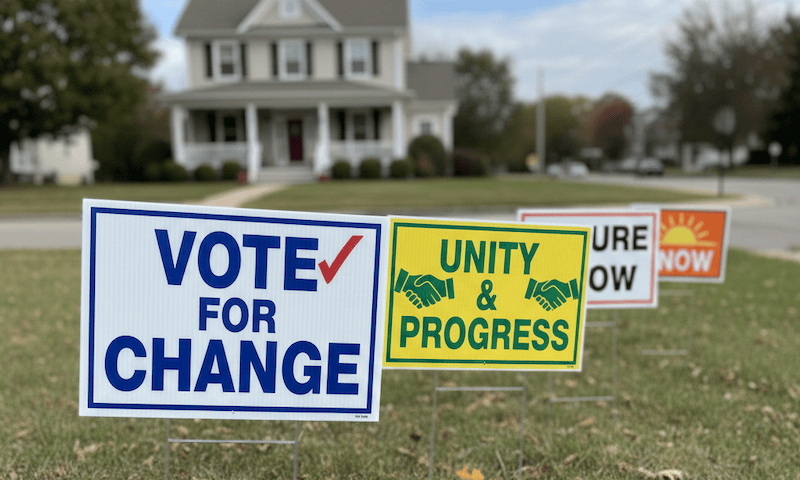
Out-of-home media matters in elections because it lives in the real world. Just as lawn signs carry influence precisely because they signal a neighbor’s support, messages displayed on storefronts, on roadside billboards, and within neighborhood retail environments benefit from place-based credibility and implicit endorsement. They appear not in a feed, but in a community — surrounded by familiar streets, trusted businesses, and daily routines. In election cycles, that physical presence can make political messaging feel more grounded, visible, and legitimate than messages delivered purely online.
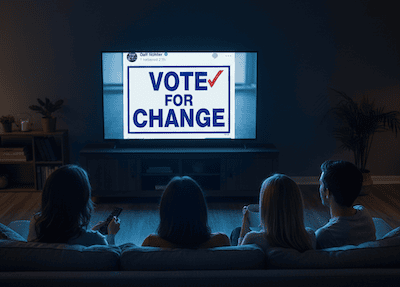
Why Media Matters in Elections
Media isn’t just where ads run — it’s where narratives are formed, communities converse, and voters make decisions.
Recent election cycles show digital and traditional media working in tandem to reach voters across platforms.
Digital tools like CTV, programmatic, and social are not only growing in spend but shape how campaigns target and engage audiences in real time.
Taken together, the 2026 elections underscore a simple but powerful truth: media doesn’t just deliver messages — it shapes how those messages are received, interpreted, and trusted. Campaigns are competing not only for attention, but for credibility and relevance in an increasingly fragmented media landscape. The mix of digital, video, and real-world visibility reflects a broader understanding that voters engage with information differently depending on context, timing, and environment.
Let’s stay informed — and engaged — together.
The WNDW Team